


Product Descriptions
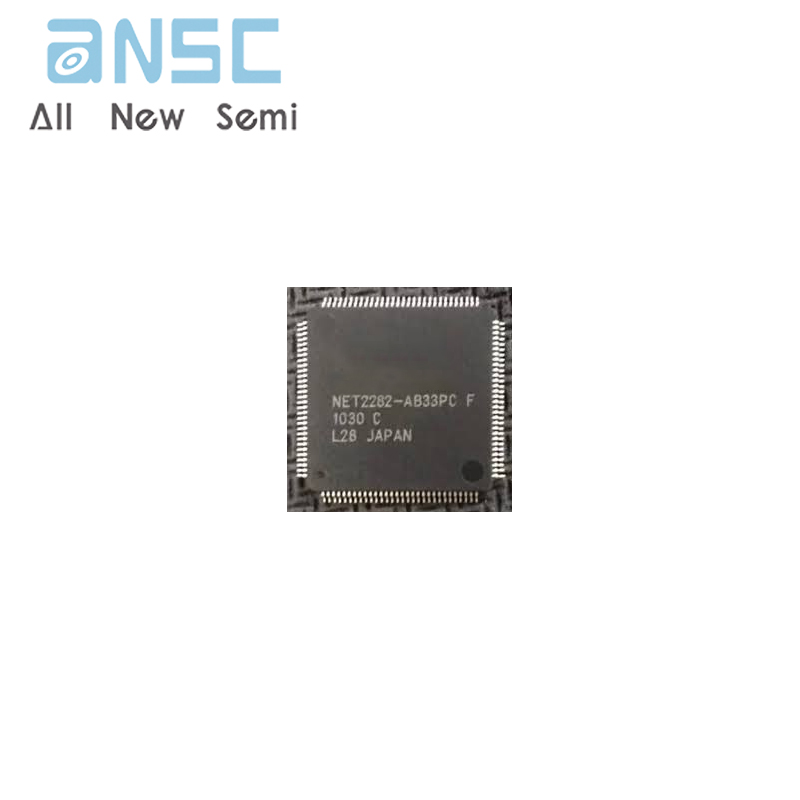
NET2282 PCI to Hi-Speed USB 2.0 Peripheral Controller is designed for easy integration with existing PCI based systems and silicon. While
there are many PCI-based USB hosts on the market, the NET2282 is one of the only PCI-based USB peripheral controllers available. With the NET2282, adding a HiSpeed USB Device port is just a matter of connecting the PCI signals with the same name together.
The PCI bus on the NET2282 can be either a PCI host or a PCI adapter. As a PCI adapter, the NET2282 can fit into any standard PCI slot (3.3 or 5 Volts). This means that any system with a PCI bus can instantly add a USB 2.0 peripheral port in minutes. As the NET2282 is supported by several operating systems, additional software modification can be minimized.
As a PCI host, the NET2282 can be used to convert existing PCI cards or CardBus adapters to stand alone USB devices or ExpressCard adapters. Rather than relying on a host PC’s PCI chipset, the NET2282 has all the resources, including emulated main memory, to configure and bring up a PCI device. Furthermore, the AutoEnumeration Technology in the NET2282 allows the USB device to be enumerated by a USB host without any interaction on the PCI side.
Product Features
Overview
o PCI v3.0 – 66MHz, 32-bit Bus
o Hi-Speed USB 2.0 Peripheral Port oIntegrated 8051 CPU @ 30 MHz
o32K of shared Random Access Memory accessible from the USB Host and the PCI Bus
o Descriptor-based DMA Controllers (4) for automatic data transfers
o Low Power 0.18u process ideal for USB Bus Powered Operation
o Lead Free Packaging
o 14x14mm, 120-Pin QFP Package
Conventional PCI Interface
o PCI v3.0 - 66MHz, 32-bit PCI Bus
o 3.3V interface with 5V tolerance for compatibility with both 3.3 and 5V PCI systems
o Plug into existing PCI based systems to instantly add a High Speed USB 2.0 Device Port
o PCI Host Option for simple PCI Adapter to USB Peripheral Conversions
o Straightforward PC Card to ExpressCardTM Conversions
o Mastering PCI Interface
o Optional PCI Arbiter included
Hi-Speed USB 2.0 Interface
o USB 2.0 Peripheral Interface
o Hi-Speed USB with Sustained Bandwidth of up to 40MBytes/sec (at 480 Mbps bursts)
o Backwards compatible to Full Speed USB connections
o Utilize up to 30 Independent USB Endpoints using Dynamic Virtual Endpoint Technology TM
o USB Auto-Enumeration Technology
o Support for Bulk, Isochronous, and Interrupt Endpoints
o Integrated PHY
Product Applications
Add a USB Device Port to PCI-Based Systems
The NET2282 can be used to easily add a USB 2.0 peripheral port to a PCI based embedded system. The standard PCI interface of the NET2282 connects gluelessly to any PCI bus.
Standard PCI registers allow the existing BIOS to configure and send data to and from the NET2282.
Firmware is available to configure the NET2282 to resemble a standard USB class device (like a printer or mass storage device) for which no USB host drivers will need to be written.
For custom applications, firmware APIs are provided to abstract the USB transactions to reads and writes. This firmware is available for various operating systems.
Migrate PCI and CardBus Designs to USB
The NET2282 is designed to easily convert existing PCI cards or CardBus adapters to stand alone USB devices. Since both PCI and CardBus chips are based around the standard PCI protocol, the NET2282 connects gluelessly with them.
Instead of a PCI host chipset and BIOS on a PC configuring the PCI/CardBus silicon, the NET2282 can itself act as the PCI host, with configuration information coming from its internal 8051 CPU or from the USB host. Auto-Enumeration Technology allows a standard USB host to detect this new USB device even if no firmware has been run. This means that firmware can actually be downloaded to the USB device after initial boot-up.
The NET2282 includes PCI clock, reset, interrupt, and arbitration pins to compensate for the other components usually found in a typical PCI host environment. Shared memory in the NET2282 functions as main memory for holding descriptors or other control data. The integrated 8051
CPU can also be used to configure the device to resemble a standard USB class device (like a communications or video device) even if there is no local intelligence on the peripheral.
Product Photos


For more product information, please download the PDF